Before the arrival of Europeans, Robben Island was inhabited by the Khoi-khoi, an indigenous people of South Africa. The island was used as a source of food and natural resources. The name “Robben” comes from the Dutch word “robben,” meaning “seal,” referring to the sea lions that once inhabited the island.
In 1652, the Dutch East India Company (VOC) established a colony at the Cape. Robben Island quickly became an important possession of the colony. The island was used for several purposes:
Robben Island was used as a prison as early as 1658. The first prisoners were criminals, rebellious slaves, and political prisoners. One of the most notable prisoners of this period was Sheikh Yusuf of Abu, a religious and political leader who was exiled to Robben Island in 1694.
After the British conquest of the Cape in 1795, Robben Island continued to be used as a prison. The regime became stricter and more organized. The island was considered one of the harshest and most isolated prisons in the British Empire.
The conditions of detention on Robben Island were extremely difficult:
Despite these difficult conditions, Robben Island became a center of resistance and learning. Many prisoners used their time to study and prepare for the fight for freedom.
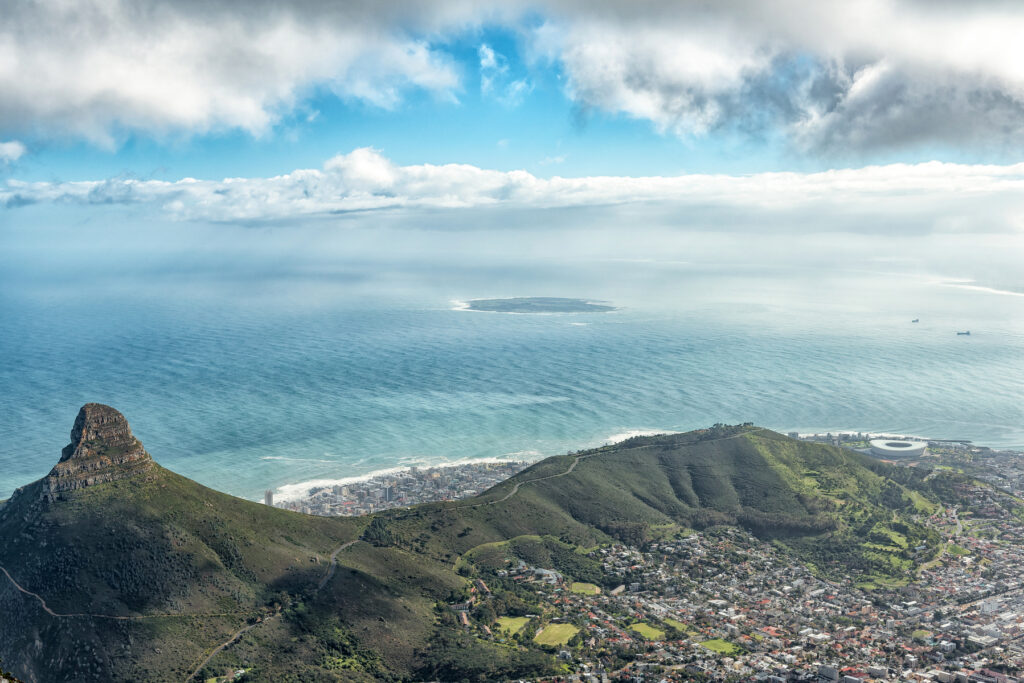
CAPE TOWN, SOUTH AFRICA, AUGUST 17, 2018: Lions Head, Signal Hill
Apartheid was a system of institutionalized racial segregation in South Africa, which lasted from 1948 to 1994. The minority white government implemented laws that discriminated against Black, Indian, and Coloured people.
During apartheid, Robben Island became South Africa’s largest political prison. Political prisoners—those who opposed the apartheid regime—were sent to Robben Island to be punished and isolated.
Between 1960 and 1990, more than 3,000 political prisoners were imprisoned on Robben Island. Among them were some of the most important leaders of the anti-apartheid movement.
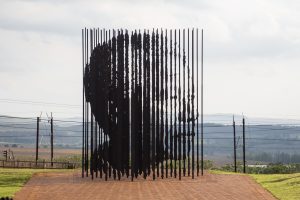
Nelson Mandela (1918-2013)
Nelson Mandela is undoubtedly the most famous prisoner of Robben Island. Mandela, leader of the African National Congress (ANC), was arrested in 1962 and sentenced to life imprisonment in 1964. He spent 18 years on Robben Island, from 1964 to 1982.
During his imprisonment, Mandela was confined to a small cell measuring approximately 2m x 2m. He worked in the limestone quarries, where conditions were extremely harsh. Despite these conditions, Mandela maintained his moral integrity and his vision of a free and egalitarian South Africa.
Other Notable Prisoners:
The prisoners on Robben Island were forced to work in the limestone quarries. This work was extremely difficult and dangerous. The prisoners worked long hours under the scorching sun, with little protection and little rest.
Quarry work served a dual purpose: to generate revenue for the prison and to break the prisoners’ spirit. However, this work also became a place of solidarity and learning for the prisoners.
Despite the difficult conditions, Robben Island became a center of learning. The political prisoners, many of them intellectuals, used their time to study and teach other prisoners.
Nelson Mandela, for example, studied law by correspondence during his imprisonment. Other prisoners taught languages, mathematics, and history. This clandestine education was an act of resistance against the apartheid regime.
After 27 years in prison, Nelson Mandela was released on February 11, 1990. His release marked a turning point in the struggle against apartheid. Mandela became a symbol of resistance and resilience.
Mandela’s release hastened the end of the apartheid regime. In 1994, South Africa’s first democratic elections were held. Nelson Mandela was elected president with an overwhelming majority.
After the end of apartheid, Robben Island was transformed into a museum and historical site. In 1996, the Robben Island Museum was officially opened to the public. In 1999, Robben Island was designated a UNESCO World Heritage Site.
Today, Robben Island is a living museum that preserves and shares the history of the struggle against apartheid. The museum attracts thousands of visitors each year from all over the world who come to learn and reflect.
The museum offers several exhibitions:
Robben Island is much more than a museum. It is a place of remembrance, a place where visitors can reflect on the importance of freedom, justice, and human dignity. It is a reminder of the sacrifices made by those who fought for liberty.
The story of Robben Island is a story of human resilience. Despite the extremely difficult conditions, the prisoners maintained their moral integrity and their vision of a better South Africa.
Robben Island is a symbol of the fight for justice and equality. The island’s history reminds us of the importance of fighting against injustice and discrimination.
After the end of apartheid, South Africa chose the path of reconciliation rather than revenge. Robben Island is a place where this reconciliation can be reflected upon and understood.
The history of Robben Island is a deep and complex one. From a military fortress to a political prison, the island has played a crucial role in South African history. Today, Robben Island is a museum and historical site that preserves this important history for future generations.
When you visit Robben Island, you are not just visiting a tourist attraction. You are visiting a place of remembrance, a place where you can learn, reflect, and be inspired by the resilience and courage of those who fought for freedom.
Visit Robben Island and discover the history that changed South Africa and the world.