Imagine yourself on a ferry pulling away from the Cape coast, the sea breeze whipping your face, as you head towards one of the world’s most historically significant destinations. Robben Island, this small rocky islet just 7 kilometers off the Cape coast, was the site of one of the greatest struggles for human freedom. It was here that Nelson Mandela spent 18 of his 27 years in prison, transforming a high-security prison into a global symbol of resilience and forgiveness.
Each year, more than a million visitors pass through the gates of the Nelson Mandela Gateway to embark on this transformative journey. But before you can set foot on this historic island, you must navigate the ticket booking process.
This comprehensive guide will explain every step, every option, and give you insider tips to secure your spot and have an unforgettable experience.
Before delving into the practical details of booking, it’s important to understand what Robben Island truly represents. It’s not simply another tourist attraction in Cape Town. It’s a living memorial to the struggle against apartheid, a place where history has been written in concrete and limestone.
The island has a history that predates the high-security prison. In the 17th century, it served as a place of exile for political prisoners and criminals. But it was in the 20th century, under the apartheid regime, that it acquired its global historical significance. Between 1962 and 1991, Robben Island imprisoned some of the greatest leaders of the anti-apartheid struggle, including Nelson Mandela, Walter Sisulu, Govan Mbeki, and Ahmed Kathrada.
What makes Robben Island particularly remarkable is that the museum there today is run by former prisoners. These men and women, who themselves suffered in the island’s cells, now guide visitors through the walls that imprisoned them. Their stories, filled with emotion and authenticity, transform a simple visit into a profoundly transformative experience.
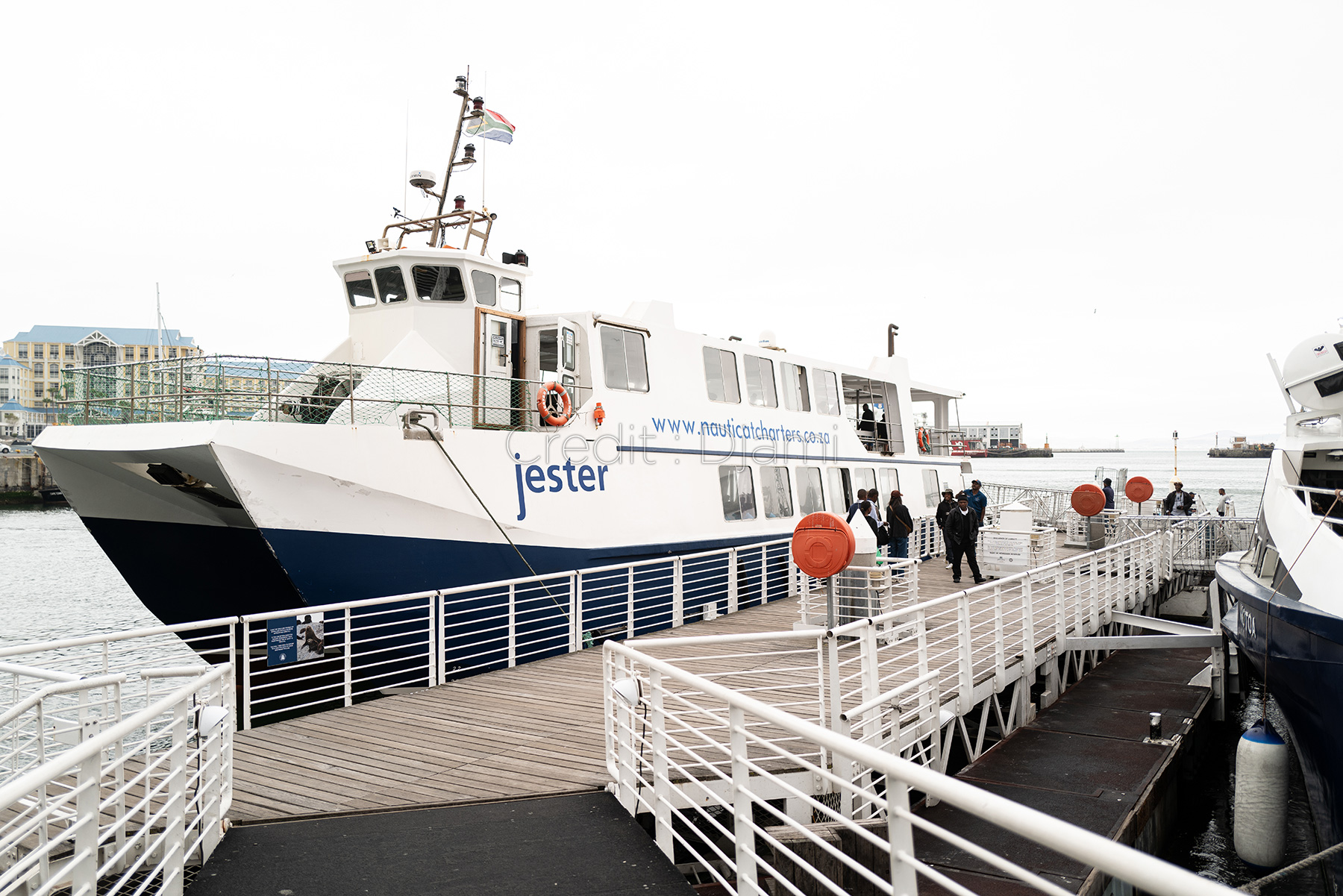
Before you begin your booking process, here is the key information you need to know:
Official operator: The Robben Island Museum is the only authorized operator for tours. All bookings are made through their official channels or through partner platforms such as Tiqets, GetYourGuide, etc.
Booking window: You can book up to 90 days in advance. This three-month window is important to remember, as it affects your booking strategy depending on the season.
High season vs. low season:
Average visit duration: Allow 3-4 hours in total, including the ferry journey (30 minutes each way) and the 2-hour guided tour of the island.
Daily capacity: The island welcomes approximately 3,000 visitors per day, divided into several tour groups throughout the day.
Standard tickets are the core of the Robben Island Museum’s offering. They include return ferry transport and a full 2-hour guided tour of the island.
For international visitors:
For South African residents:
These prices reflect the museum’s fair pricing policy, which recognizes that local residents have more regular access to the island. The prices for international visitors support the museum’s conservation and education efforts.
Premium Tours: Exclusive Experiences
Beyond standard tours, the Robben Island Museum offers two premium experiences for those seeking something more special.
Sunset tour (700 ZAR, approximately €37)
This magical 4-hour experience allows you to see the island in a completely different light. You begin with the standard guided tour, but you remain on the island until sunset. It’s a profoundly moving experience: seeing Nelson Mandela’s cell bathed in the golden light of the setting sun, then watching the sun disappear below the horizon from the island’s shore, creates a moment of intense reflection.
Availability is limited (usually 2-3 departures per week), and you must book at least 4 weeks in advance. Weather conditions must be favorable, so there is always a risk of cancellation or postponement.
The photographic tour (800 ZAR, approximately €43)
Designed for serious photographers, this 3.5-hour tour is led by a professional photographer who will show you the best angles, the best light, and the most powerful compositions. You will learn how to capture the historical and emotional essence of the island.
This tour is only available on weekends and accommodates smaller groups (15-20 people), meaning a more intimate experience and a better quality tour.
Group visits: Savings and flexibility
If you are travelling in a group of 10 or more people, you have access to special group rates:
Group tours also offer added flexibility: you can choose your own private guide and have more control over the itinerary and timing of the tour.
Before you even think about booking, you need to understand how the seasons affect your visit to Robben Island.
Autumn (March-May): This is generally the best time to visit. Temperatures are pleasant (18-24°C), the sea is calm, and the crowds are manageable. Ferry conditions are excellent, meaning there is little risk of cancellation.
Winter (June-August): Temperatures drop (16-17°C), but the sky is often clear, which is ideal for photography. Crowds are smaller, except during school holidays (mid-June to mid-July). Weather conditions can be unpredictable, with occasional rain.
Spring (September-November): Temperatures gradually rise (19-24°C). September and October are excellent, but November starts to get busy as the summer holidays approach.
Summer (December-February): This is peak season. Temperatures are warm (24-26°C), crowds are massive, and seas can be rough. The risk of ferry cancellations increases significantly. It’s also the most expensive time.
Check the ferry conditions
One of the realities of Robben Island is that the ferry can be cancelled due to weather conditions. The museum cancels tours when:
These cancellations are more frequent in December-February and June-August. If you are visiting during these periods, check the weather forecast at least one week before your planned visit.
For the high season (November-February):
Book 3-4 weeks in advance. Tickets sell out quickly, and you risk ending up with less desirable time slots or a completely cancelled tour if you wait too long.
For the low season (March-October):
You can usually book 1-2 weeks in advance. There’s more flexibility, and you have a wider choice of time slots.
The available time slots are generally:
The 9:00 am time slot is generally the best for several reasons:
The 3pm slot is the least recommended as you finish your visit late in the afternoon, and if the ferry is delayed, you might not return before sunset.
Weekdays (Tuesday-Thursday) are significantly less busy than weekends. If your schedule allows, plan your visit for a weekday for a more intimate experience and a better overall experience.
The official website is www.robbenisland.org.za . This is the official booking channel.
For greater ease and flexibility you can book via the Tiqets platform, (more ease especially when making cancellations).
Click on the “Book Tickets” button. You will be redirected to the online booking system.
Arrive early: Arrive at least 30 minutes before your time slot. This gives you time to check in, go through security, and mentally prepare for the experience.
Bring your e-ticket: Whether printed or on your phone, you must have your e-ticket with you.
Bring your ID: You must present a valid ID (passport or driver’s license) for registration.
Wear comfortable clothing: You will be walking for 2 hours on the island. Wear comfortable walking shoes and clothing appropriate for the weather.
Bring water and snacks: There are no food vendors on the island. Bring your own water and snacks.
Bring a camera: You’ll want to document this experience. However, no flash indoors (to preserve historical artifacts).
Check-in (15 minutes): Please present yourself at reception with your e-ticket and ID. Staff will verify your information and give you an identification wristband.
Security check (10 minutes): As in an airport, you will go through a standard security check.
Ferry boarding (10 minutes): You will board the ferry which will take you to the island. It’s a magical moment – you see the Cape receding into the distance and the island approaching.
Ferry journey (30 minutes): The journey takes approximately 30 minutes. This is a great opportunity to take photos of the Cape coastline and mentally prepare yourself for what you are about to experience.
Guided tour of the island (2 hours): Your guide, often a former prisoner, will take you to key sites on the island: Nelson Mandela’s cell, the limestone quarry, the museum, and other historical areas. It’s a deeply moving experience.
Return ferry (30 minutes): You will return to the mainland by ferry, with time to reflect on what you have experienced.
Tip 1: Be flexible with your dates
If you have some flexibility with your travel dates, you can save money and have a better experience by visiting during the off-season (April-May or August-October). Prices are the same, but there are fewer crowds and the weather is generally better.
Tip 2: Use group discounts
If you are travelling with 9 other people, you can save 60 ZAR per person by booking as a group. That’s a saving of 600 ZAR (approximately €32) for a group of 10.
Tip 3: Visit during the week
Weekdays (Tuesday-Thursday) are significantly less busy than weekends. If your schedule allows, plan your visit for a weekday for a more intimate experience.
Tip 4: Book the 9:00 slot
The 9:00 AM slot is best for several reasons: fewer crowds, better lighting, and less heat. If this slot isn’t available, try 11:00 AM.
Tip 5: Bring your own food
Food prices at the V&A Waterfront are very high. Bring your own food and water to save money and have more control over your experience.
Tip 6: Check online reviews
Before booking, check online reviews on TripAdvisor or Google. You can get valuable information about what other visitors liked or disliked.
Tip 7: Prepare yourself emotionally
Robben Island is not just a tourist attraction. It’s a place steeped in history and emotion. Prepare yourself mentally for a profound and potentially moving experience.
Booking your tickets to Robben Island is more than just a business transaction. It’s the first step towards an experience that will likely change your perspective on freedom, resilience, and human dignity.
Robben Island is not an ordinary tourist attraction. It is a historic place of pilgrimage, a living memorial to the struggle against oppression, and a celebration of the human capacity to forgive and transform.
When you stand in the 2.4m x 2.1m cell where Nelson Mandela spent 18 years, when you walk through the limestone quarry where he worked under the scorching sun, when you listen to a former prisoner recount his experiences with remarkable dignity and grace, you understand that this visit is much more than just a tourist visit.
Follow the steps outlined in this guide, prepare yourself mentally and physically, and get ready for an experience that will stay with you for the rest of your life.
Ready to book? Go ahead. Book today and secure your place for an unforgettable experience.
Q: Can I book without a credit card?
A: Yes. You can book in person at the Nelson Mandela Gateway or by phone using a credit card. You can also have someone else book for you online.
Q: What happens if the ferry is cancelled?
A: If the ferry is cancelled due to weather, you will receive a full refund or the option to reschedule your visit for another date at no extra cost.
Q: Are children allowed?
A: Yes, children aged 6 and over are allowed everywhere on the island. Children under 6 are not allowed in the prison area (for safety and preservation reasons).
Q: Can I bring my own food?
A: Yes, you can bring your own snacks and water. There are no food vendors on the island.
Q: Is the tour wheelchair accessible?
A: Partially. Some areas of the island are accessible, but not all. Contact the museum in advance if you have specific accessibility needs.
Q: How long does the tour last?
A: The full tour lasts 3-4 hours, including the ferry ride (1 hour total) and the 2-hour guided tour on the island.
Q: Can I visit without a guide?
A: No, guided tours are mandatory for safety reasons and to preserve historical sites.
Q: When is the best time to visit?
A: April-September is generally the best time. Temperatures are pleasant, crowds are manageable, and weather conditions are usually good.
Q: Can I take photos?
A: Yes, photography is permitted. However, no flash photography is allowed indoors to preserve historical artifacts.
Q: Can I modify my reservation after I have made it?
A: Yes, you can modify your reservation by contacting the museum by phone or online, subject to availability.